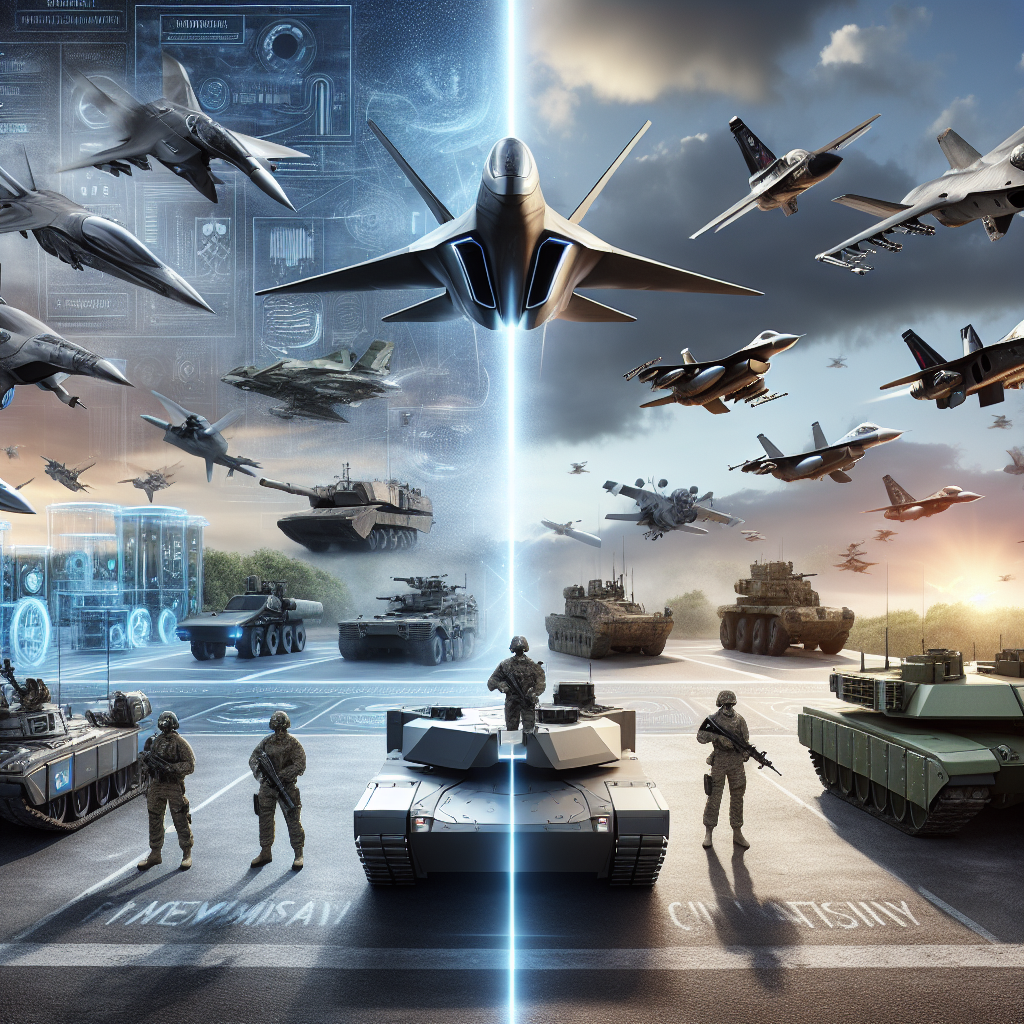
Elon Musk Versus Lockheed Martin: A Clash of Perspectives on Military Technology
The Competitive Landscape of Defense Technology
In an extraordinary intersection of aerospace innovation and military strategy, Elon Musk, the CEO of Tesla and SpaceX, recently cast doubt on traditional defense methodologies, specifically targeting Lockheed Martin’s F-35 fighter jet. This incident draws attention not only because of Musk’s influential position in the tech and aerospace sectors but also due to the broader implications for investors and market trends in the defense industry.
On a typical Sunday morning, Musk tweeted a provocative statement regarding the use of drones in military warfare, suggesting that “some idiots are still building manned fighter jets like the F-35.” This statement came as a bold departure from conventional wisdom regarding military strategy and capabilities, igniting discourse within the defense community and among investors who might view Musk’s comments as indicative of shifting dynamics in defense expenditures and priorities.
Understanding the F-35 and Drone Technology
The F-35, developed by Lockheed Martin, is widely recognized as a marvel of modern military engineering, boasting capabilities like stealth combat, supersonic flight, and advanced ordinance delivery systems. Its strategic value is underscored by its role in the U.S. military’s arsenal and among allied nations. Richard Aboulafia, managing director of AeroDynamic Advisory, counters Musk’s stance by emphasizing that while drones have an innovative place in contemporary warfare, they cannot entirely replace manned aircraft, particularly in roles requiring extensive strategic engagement, including intercepting bombers or executing long-range naval support missions.
Drones are indeed becoming an integral component of military operations. The Defense Department’s “Replicator Initiative” underscores a commitment to deploying numerous autonomous systems in various warfighting domains. However, this does not imply an either/or scenario; rather, each form of military equipment serves distinct missions based on operational needs.
Drones and the Evolving Military Landscape
Admiral Samuel Paparo, commander of U.S. Indo-Pacific forces, emphasized the complexity of modern military dynamics in a recent address. In discussing the successes witnessed by Ukraine in leveraging drone technology against Russian forces, Paparo noted that such technology wouldn’t adequately counterbalance the extensive capabilities of the Chinese military—which boasts over 2,100 fighters and significant naval assets.
In response to Musk’s commentary, Lockheed Martin reiterated the importance of the F-35, defining it as “the most advanced, survivable and connected fighter aircraft in the world” and vital for ensuring national defense amid a rapidly evolving geopolitical landscape. The firm’s commitment to a robust relationship with the Trump administration and Congress remains crucial to its operational strategy.
Market Reactions and Implications
The question arises: how will Musk’s comments influence Lockheed Martin’s stock performance? As investors closely gauge the implications of Musk’s influential opinions, one cannot ignore the broader context. Leading into the trading on Monday, Lockheed’s shares had dipped approximately 0.2% since the November 5 presidential election, contrastingly, the S&P 500 index had appreciated roughly 4.5% over the same period. Nevertheless, Lockheed’s stock has soared about 20% since the beginning of the year—a compelling trend that highlights the resilience of the defense sector.
Musk’s dual role as a leader in both the automotive and aerospace industries creates a unique tension in market perception. SpaceX, under Musk’s leadership, is valued at around $250 billion, outpacing Lockheed’s market cap of about $150 billion, including debt. This substantial difference in valuation exemplifies a shifting landscape where advanced technology and military contracts intertwine, potentially redefining investment strategies within the defense sector.
Furthermore, Musk’s involvement with Trump’s Department of Government Efficiency, a newer initiative aimed at curbing government waste, complicates this landscape, particularly concerning defense contracts. SpaceX’s COO, Gwynne Shotwell, articulated a preference for competitive bidding based on efficiency and cost rather than traditional cost-plus contracts, which could signal a broader shift in government contracting norms.
The Bigger Picture for Investors
As the market absorbs Musk’s recent provocation, it spurs a larger discussion about the future of defense technology and the interaction between manned and unmanned systems. For investors, understanding these dynamics is crucial. Amid rising global tensions and the emphasis on advanced technologies, defense budgets and spending patterns are set to become increasingly relevant in shaping stock market performance.
In conclusion, the dynamic interplay of technology and military strategy as highlighted by Musk’s comments serves as a crucial reminder of the evolving nature of defense expenditures. As the world grapples with the implications of investing in traditional versus emerging military technologies, thoughtful analysis and an awareness of broader macroeconomic trends will be essential for investors navigating the future landscape of defense and national security investments.