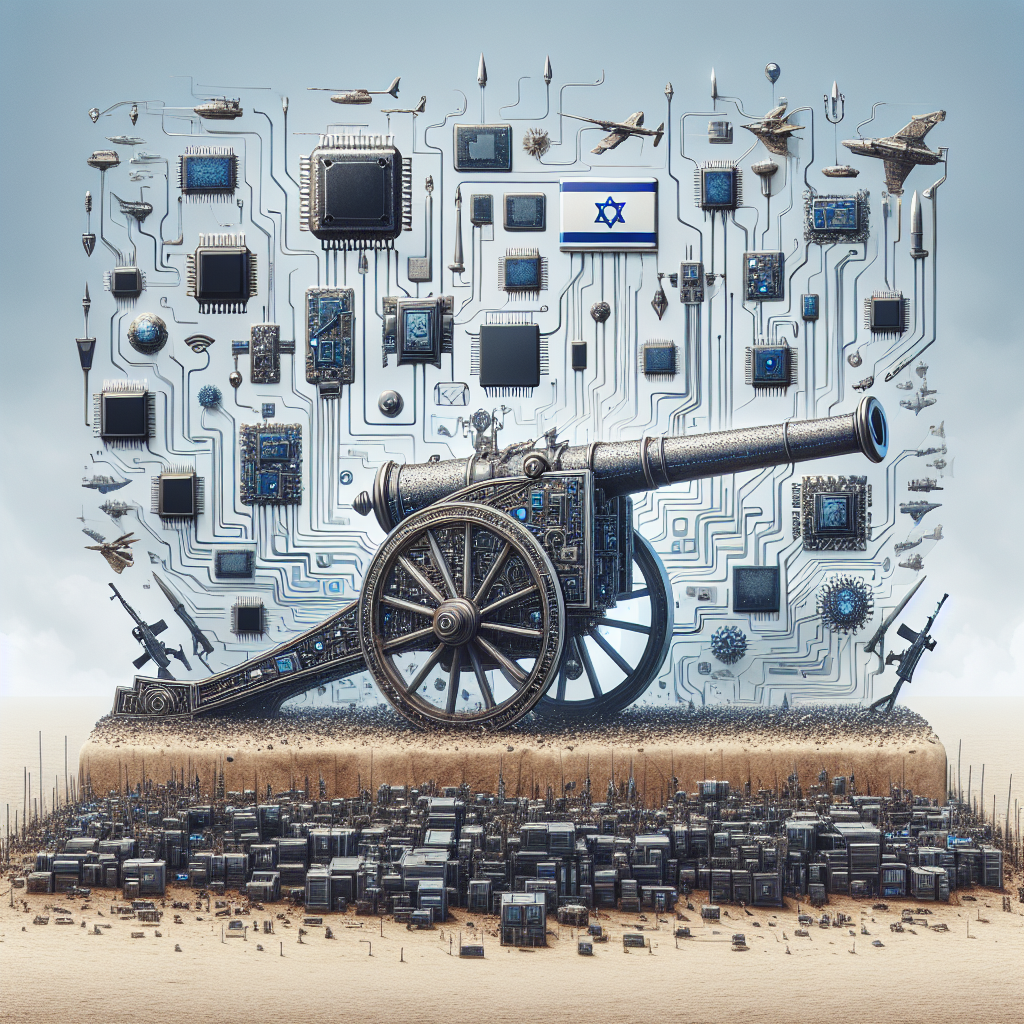
Israeli Startups Make Global Plans After Key Role in War
The surge in military technology innovation within Israel’s startup ecosystem is being propelled by the ongoing conflict with Hamas. Notably, Israeli startup Xtend has gained attention for its role in creating advanced drone technology, including systems reportedly used to track Hamas leader Yahya Sinwar, who was killed during a counteroffensive. As traditional manufacturers become sidelined in favor of faster, cutting-edge solutions, Israeli startups like Xtend find themselves positioned as essential players in modern warfare.
The Emergence of a New Military Landscape
Tech companies are taking center stage in the Israeli Defense Forces’ (IDF) strategy as the war has pushed for an urgent need for effective and efficient solutions in the battlefield. Aviv Shapira, co-founder and CEO of Xtend, emphasized the significance of rapid technological adaptation in modern warfare, mentioning how their indoor drones, equipped with artificial intelligence, can facilitate high-precision strikes from distances as far as 9,000 kilometers (5,600 miles) with minimal human intervention. “We’re actually re-learning how to fight with robots,” Shapira stated, underscoring the evolution of military operations.
Capitalizing on a Wartime Boom
This wartime necessity has secured uplifted growth trajectories for Israeli startups. Xtend, for instance, has swiftly transitioned from product design to deployment, landing major contracts with both the Israeli defense ministry and the U.S. government. The startup raised $40 million in its second funding round in August and signed an $8.8 million contract with American defense authorities, significantly enhancing its operational capabilities.
Sequoia Capital, the renowned U.S. venture capital firm that manages approximately $85 billion in assets, has re-entered investments in Israel following the conflict that began on October 7, 2023. Shawn Mcguire, a partner at Sequoia, noted, “War gives people experience,” highlighting the value of resilient innovation that startups possess in times of urgency. The high-tech sector is a critical component of the Israeli economy, accounting for 16% of employment, over half of exports, a third of the national income tax, and 20% of overall economic output.
Supporting Startups Amid Conflict
The Israeli defense ministry has ramped up cooperation with startups to facilitate the quick adoption of innovative technologies. Colonel Nir Weingold, head of planning and development at the Directorate of Defense Research & Development (DDR&D), mentioned that a “green path” has been established to fast-track selected startups. The defense ministry has awarded approximately 782 million shekels (around $219 million) to 101 startups since the onset of the conflict. Notably, around 50% of the anti-drone technology deployed during the hostilities had its origins in these small firms, reflecting an impressive entrepreneurial pivot towards defense innovation.
Generating Global Interest
The importance of this military-tech collaboration was evident during the inaugural Global DefenseTech conference in Tel Aviv, which showcased an array of startups gaining traction in defense applications. Major multinational firms, including Boeing, expressed keen interest in tapping into Israel’s innovative defense sector. Ayal Somech, head of growth and innovation at Boeing Israel, remarked, “War is good for business and Israel has been a major partner.”
Transforming Challenges into Opportunities
Challenges faced by the IDF, particularly concerning anti-drone capabilities from various adversarial factions, have rallied startups to re-develop and enhance their technologies. Companies like Thirdeye Systems have adapted swiftly, moving from development to substantial contracts with the defense ministry amid the wartime climate. Thirdeye’s shares have surged approximately 50% since the conflict’s inception, further emphasizing the market’s recognition of the strategic value these solutions hold:
- Thirdeye has expanded from three to seven product lines.
- The company sold a 30% stake to Emirati state-owned defense conglomerate EDGE for $10 million.
This rare public investment signifies a burgeoning relationship between Israeli and Emirati firms that could yield new market opportunities, contingent upon approval from Israel’s defense ministry.
Conclusion: The Future of War and Innovation
The ongoing conflict has profoundly reshaped the landscape of military technology in Israel, featuring an unintended boom for startups specializing in uplifting technological warfare capabilities. Innovations pioneered in Israel not only bolster its defense efforts but also forge a path toward global partnerships. As the battlefront evolves, so too does the investment landscape, emerging as fertile ground for pioneering military technology ventures that could redefine modern warfare.