
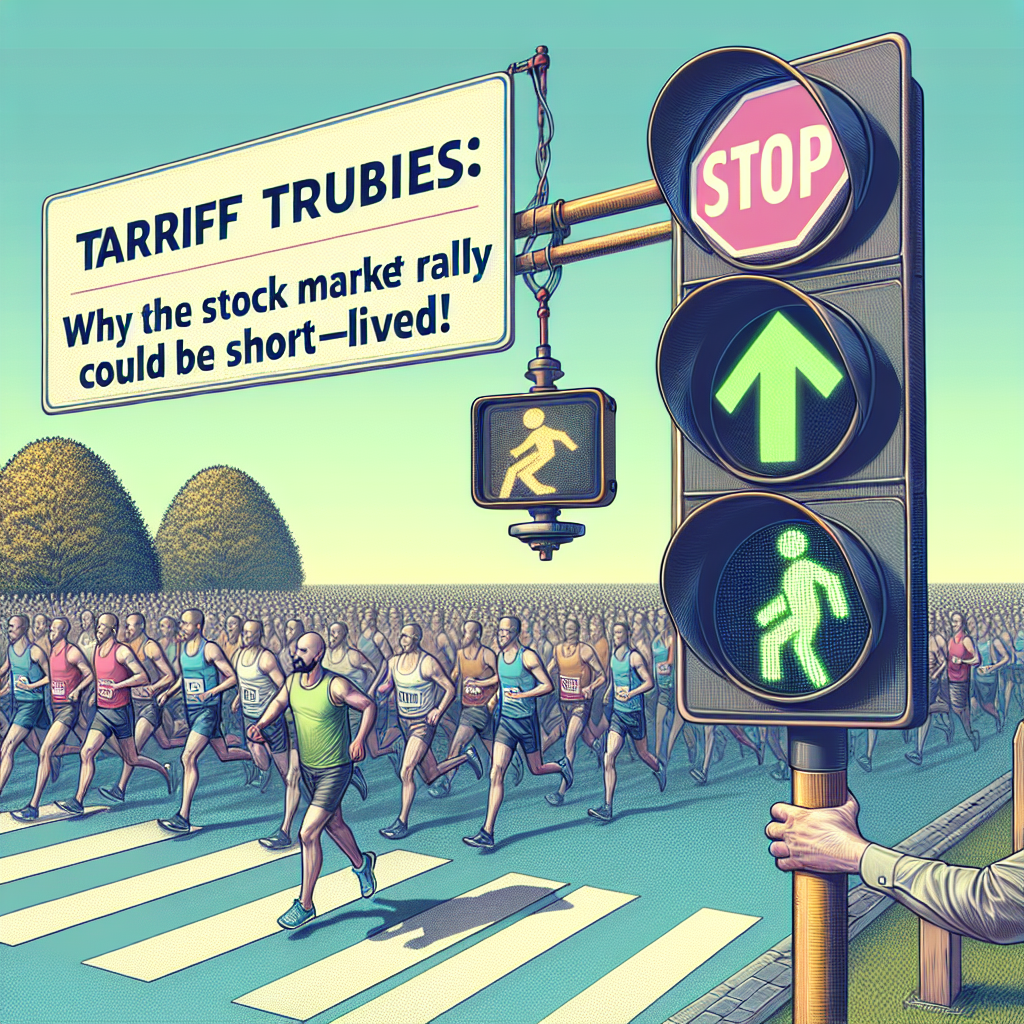
Potential Trouble for Stock Rally as Tariff Negotiations Unfold
The recent optimism in the U.S. stock market appears to be wavering as the Trump administration’s recent backtrack on tariffs raises questions about the sustainability of the current rally. According to Sevens Report Research, the market has already priced in expectations of a reprieve from the hefty “liberation day” tariffs introduced by President Donald Trump on April 2, setting the stage for a potential pullback.
The Latest Developments
Tom Essaye, founder and president of Sevens Report Research, highlighted that the White House has significantly relaxed its hardline stance since the initial tariff announcements. This includes delaying the imposition of reciprocal tariffs and granting exemptions to critical categories of imports such as computer chips, electronics, pharmaceuticals, and automobiles. On May 5, 2025, the S&P 500 index closed at 5,650.38, reflecting a downturn of 0.6% as investors reacted to these developments.
Despite a noteworthy streak of consecutive gains—spanning nine straight days, the longest since November 2004—the overall sentiment suggests vulnerability as the S&P 500 remains within a projected range of 5,100 to 5,500, according to Essaye. “The reality of the past month post-‘liberation day’ hasn’t been as bad as feared, which has allowed the market to recover losses,” he noted. However, he cautioned that such recoveries may not provide a lasting boost.
Investor Sentiment and Market Response
Investor anxiety is palpable, as many are beginning to understand the potential adverse impacts of tariffs on the U.S. economy. The heightened prices for consumer goods that these tariffs may trigger could dampen spending and economic growth. With ongoing negotiations at the forefront, market participants are keenly monitoring signals from the White House regarding future trade agreements.
Although recent news suggested a cooling of trade tensions with China—one of the world’s largest economies—the underlying effects of the new tariff levels are still looming. “Tariffs will be substantially higher than they were on January 2, and that is a headwind on growth,” remarked Essaye, emphasizing that the current volatility could deepen as investors adjust to disappointing tariff news.
Market Performance and Trends
Despite the recent positive news, the S&P 500 ended Monday, May 5, down 3.9% for the year, illustrating a lack of momentum following earlier gains. The index managed to erase losses incurred post-“liberation day,” but the prevailing trend points to three consecutive months of declines, raising concerns about continued market vulnerability.
Essaye articulated that although hard economic data shows resilience, the market hasn’t yet felt the full repercussions of tariffs and prevailing uncertainty. “Like earnings, the risk to growth is one direction: slower,” he indicated, further complicating the investment landscape.
Strategic Investment Outlook
In light of the evolving market conditions, Essaye has recommended a shift toward more defensive sectors, including utilities, consumer staples, and healthcare. He advocates for broader diversification in U.S. equities, pointing to the Invesco S&P 500 Equal Weight ETF (RSP) as a strategic example. Furthermore, he supports investment in exchange-traded funds that prioritize low volatility, such as the iShares MSCI USA Min Vol Factor ETF (USMV), alongside a focus on high-quality stocks through the iShares MSCI USA Quality Factor ETF (QUAL).
“While there have been positive developments, the market’s recent performance indicates that the fundamentals may not be as strong as implied,” noted Essaye. As investors navigate the uncertain landscape, these insights into sector positioning and investment strategies may prove critical for weathering impending economic fluctuations.
Conclusion
In summary, while the stock market enjoyed a momentary uplift following the initial tariff rollback announcement, it has now entered a period of cautious observation. The potential ‘sell-the-news’ reaction following formal trade agreements could further destabilize market confidence, rendering investors wary in this unpredictable economic climate. Therefore, it remains crucial to stay informed of ongoing developments and reassess investment strategies accordingly.


