
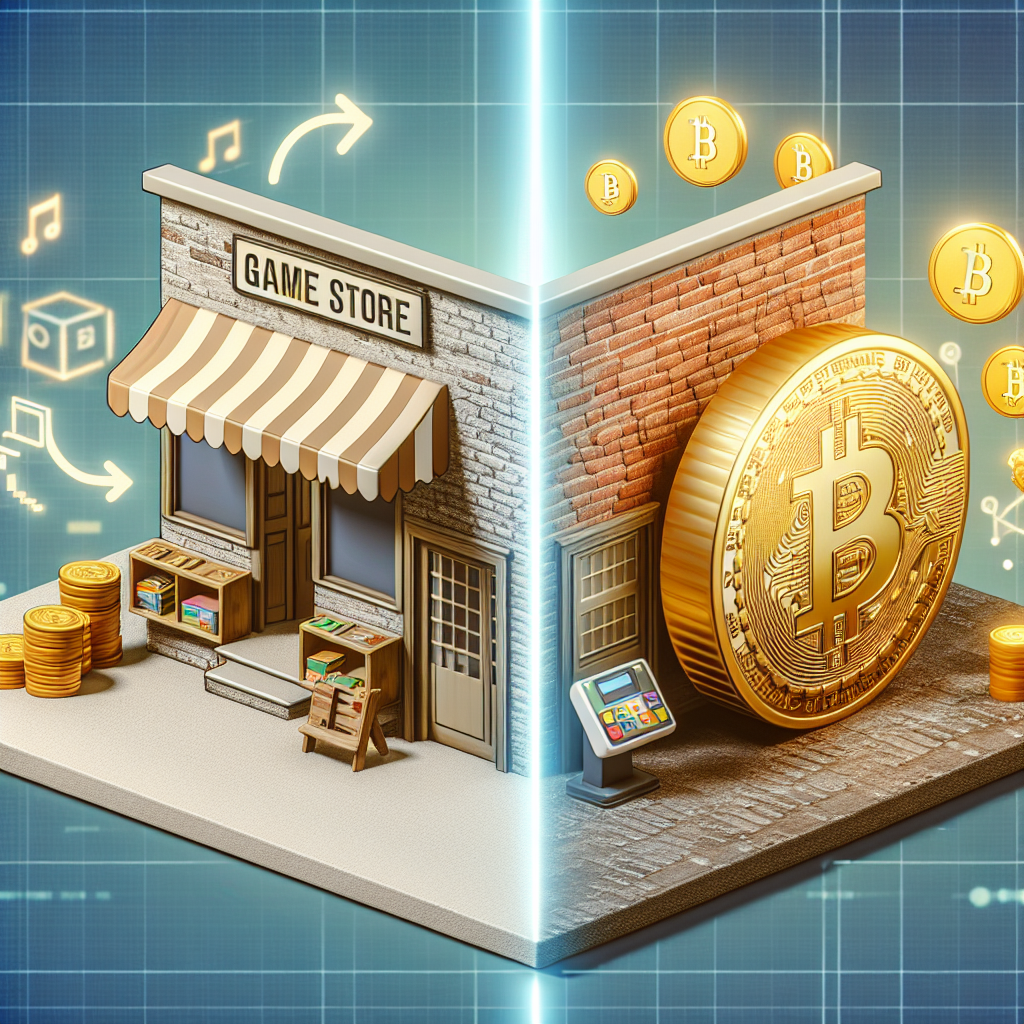
GameStop’s Bold Move: Embracing Bitcoin Amidst Challenges
In a dynamic twist within the evolving landscape of digital finance and gaming, GameStop Corporation, the video game retailer known for its meme stock momentum, announced a significant shift in its investment strategy. The company revealed that its board unanimously approved an update to its investment policy, allowing for the purchase of Bitcoin as a treasury reserve asset. This move comes at a time when the company is aggressively seeking new sources of growth, propelling its stock price to surge by 13% in premarket trading, reaching $28.75.
Financial Performance and Stock Movements
Despite GameStop’s stock spike, the company’s fourth-quarter financial results for the year ending February 1 revealed a mixed performance. GameStop reported net sales of $1.28 billion—falling short of the anticipated $1.48 billion as surveyed by FactSet—while adjusted earnings of 29 cents per share managed to surpass expectations of 8 cents. Interestingly, GameStop reported a net income of $131.3 million, comfortably exceeding the expected $33 million.
For the full fiscal year, net sales reached $3.82 billion, again topping analyst expectations, though still below the anticipated $4.02 billion. Overall, with shares having risen 64% over the past 12 months, volatility remains a constant; year-to-date, the shares are down approximately 19% as of Tuesday’s close.
Strategic Shift Amid Core Business Challenges
GameStop has been increasingly shifting its focus from physical storefronts to a more diversified approach amid the rapid evolution towards digital gaming. The recent strategic updates signify an attempt to pivot their business in response to an industry no longer dominated solely by physical game sales. This business transformation faces scrutiny, as GameStop has been aggressively closing brick-and-mortar locations and reducing its presence in numerous international markets while simultaneously venturing into collectibles, such as trading cards. Analysts, including Michael Pachter of Wedbush Securities, express skepticism regarding the efficacy of these new ventures, questioning the company’s ability to effectively transition and find profitability in its core business.
The Move into Cryptocurrency: A Game Changer or a Gamble?
The decision to invest in Bitcoin also comes as GameStop attempts to emulate other companies, notably MicroStrategy, which has successfully integrated Bitcoin into its strategy, trading at a valuation closely tied to its Bitcoin holdings. The proposal allows for “a portion of our cash or future debt and equity issuances” to be allocated for Bitcoin investment, without setting a limit on potential acquisition. However, this strategic shift also raises concerns about GameStop’s clarity regarding operational details and feasibility of executing such large-scale investments in cryptocurrency.
As the meme stock hysteria continues to loom large over GameStop’s operations and stock performance, the leadership under CEO Ryan Cohen has seen renewed interest from the investor community, bolstered in part by key influencers like “Roaring Kitty” (Keith Gill). His public endorsement continues to resonate with retail investors, but analysts are cautious about how this enthusiasm translates into sustainable growth.”,”
Expert Insights on Future Implications
While there are optimistic undertones surrounding GameStop’s foray into Bitcoin and other avenues, experts suggest that the broader implications could signal more uncertainty ahead. Pachter has articulated ongoing concerns regarding the company’s long-term strategy, asserting that its continued slow liquidation and restructure attempts could ultimately diminish share value, especially considering the stock’s current trading metrics. In fact, analysts have reiterated their “Underperform” rating with a grim 12-month target price of $10.
A Partnering Approach to E-Commerce
Part of boosting operational efficacy, GameStop has ventured into an arrangement with the digital financial services company, Zip Co, to enable installment payments for both online and in-store purchases. Given that nearly 84% of Zip’s U.S. customers shop for gaming-related products at GameStop, this partnership appears to be a strategic move aimed at increasing accessibility and customer satisfaction within the gaming sphere.
Conclusion: Navigating a New Game Landscape
As GameStop sets its course on this transformative path by embracing Bitcoin and exploring new business opportunities, stakeholders are watching closely. While the company’s moves into cryptocurrency and collectibles reflect an adaptability to changing consumer preferences, the skepticism remains robust regarding the potential effectiveness of these strategies amidst pressing challenges in their core business model. In an era where digital transformation is the name of the game, how well GameStop capitalizes on emerging trends will be pivotal in determining its future trajectory within the financial and gaming ecosystems.


