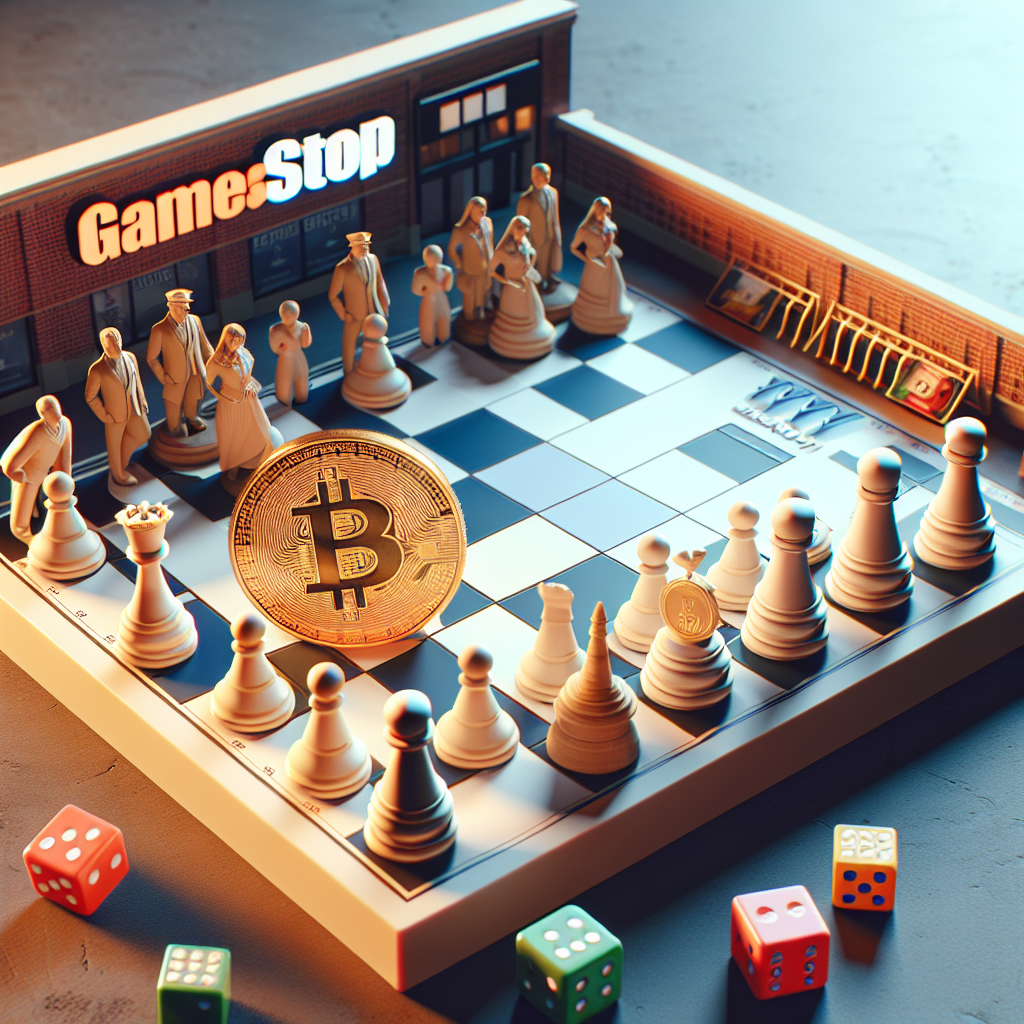
GameStop Aims to Follow MicroStrategy’s Bitcoin Model with New Corporate Strategy
In a surprising move that has garnered significant market attention, GameStop Corp. is positioning itself to become the next MicroStrategy with its latest venture into the world of cryptocurrency. On March 26, 2025, the iconic videogame retailer announced it would classify Bitcoin as a treasury-reserve asset, mirroring the strategic approach taken by MicroStrategy, a pioneering software company that has held Bitcoin as its primary asset since 2020.
GameStop’s Cryptocurrency Strategy
GameStop’s decision marks a pivotal turn as the company plans to institutionalize Bitcoin within its capital structure. Along with its investment policy update, GameStop also proposed a private offering of $1.3 billion worth of convertible senior notes, highlighting its commitment to reinforcing its balance sheet in a tumultuous retail environment. A statement from the company indicates that net proceeds from the offering will fund general corporate activities, of which purchasing Bitcoin is a key focus. Following this announcement, GameStop shares saw a notable rise of 11.7% during regular trading, although they subsequently fell by 7.5% in after-hours trading.
Adapting to Market Challenges
GameStop’s pivot comes at a time of significant operational restructuring. The company has been grappling with declining sales and fierce competition from digital gaming platforms and streaming services. Under the leadership of CEO Ryan Cohen, who took over in 2023, GameStop has streamlined its operations. This has included the closure of 590 stores in the U.S. throughout the fiscal year 2024, as noted in a recent 10-K filing with the Securities and Exchange Commission.
The company’s determination to innovate has drawn parallels to other players in the sector. Adam O’Brien, CEO of Bitcoin exchange Bitcoin Well Inc., observed that Bitcoin acquisition allows companies like GameStop the breathing room needed for strategic innovation: “Over the next decade, companies will realize that Bitcoin is a safe haven for capital over the long term.”
Following in MicroStrategy’s Footsteps
GameStop’s strategy has already led to buzz on social media, being dubbed “Strategy lite,” a nod to MicroStrategy’s robust cryptocurrency positioning. The decision resonates with other corporations integrating Bitcoin as a key asset and builds upon the relationship demonstrated when MicroStrategy’s executive chair, Michael Saylor, welcomed Cohen to “Team Bitcoin” on social media.
This burgeoning bitcoin embrace comes amid an environment where companies such as Robinhood Markets Inc. and Coinbase Global Inc. are seeking to capitalize on a potentially more crypto-friendly U.S. administration under President Donald Trump, who has expressed ambitions to make the U.S. “the crypto capital of the world.”
The Financial Landscape
As GameStop weighs its bitcoin strategy, it is essential to note the volatility associated with the cryptocurrency market. The company’s recent filing stated that it has no maximum limit for Bitcoin accumulation. Furthermore, it retains the option to liquidate any Bitcoin it does acquire—a flexibility that hints at prudence amid price fluctuations.
Additionally, GameStop reported its third consecutive quarterly profit recently, with a significant increase in cash reserves. As of the latest figures released, the company holds approximately $4.775 billion in cash and marketable securities, up from $1.199 billion year-on-year. Analyst Michael Pachter from Wedbush has raised the company’s price target to $11.50, citing the strength of its operating profit and cash reserves.
Market Reactions and Investor Sentiment
Despite the optimism surrounding GameStop’s financial restructuring and bitcoin announcement, skepticism remains among some analysts. Wedbush maintained an underperform rating on the stock, although their tone evolved from previous bearish outlooks. The perception of GameStop’s future will increasingly hinge on its ability to successfully navigate its dual paths of operational efficiency and its bold foray into cryptocurrency.
Conclusion
GameStop’s strategic pivot into Bitcoin represents both a challenge and an opportunity. It reflects the company’s adaptive strategies in the wake of significant market disruptions. If successful, GameStop could redefine its financial narrative and establish itself among a new generation of companies leveraging cryptocurrency to enhance resilience in a competitive market landscape. Whether this bold move will pay dividends for shareholders remains to be seen, but for now, GameStop has certainly positioned itself at the intersection of retail reformation and digital currency innovation.